Who We Are

Peak is a boutique, Warsaw-based 3D visualization studio founded in 2014 by Piotr Pietruczak. Our team brings together architects and 3D artists united by a shared passion for clear and engaging visual storytelling.

With a background in architecture and hands-on design experience, we understand the design process and speak the language of our clients. Over the years, we’ve completed more than 600 projects and delivered over 2,500 visuals — from small-scale competitions to full marketing campaigns.

We’re based in Warsaw but work with clients around the world.

What We Do

We create visualizations, animations, and short films that help present architectural designs before they’re built. But these are more than just images — they’re meant to evoke atmosphere, light, and intent.

Whether it’s a competition, client presentation, or marketing material, we help communicate your project in a compelling and visually consistent way. We work with early concepts as well as finalized developments ready to go public. Our goal is to make visuals that don’t just show architecture — but tell a story about it.

Every project starts with understanding its purpose — what it shows, who it’s for, and where it fits. Our process is structured but flexible: from input analysis and modeling to cameras, lighting, detail, and post-production.

Our Approach

Each image we create is shaped with care. We pay close attention to composition, realism, and mood. Light, context, and greenery are all essential parts of how we tell each project’s story — not just decorative elements, but tools to support the message. We want our visuals to look great — but also to mean something.

Visualization is an important part of communicating architecture — and it often plays a key role in how a design is perceived and understood. We believe that telling the story of a project clearly and visually helps it reach its full potential.

By combining technical skill with experience and intuition, we help bring your work to life in the best possible light.

As a studio, we’re always curious about what’s next — in tools, workflows, and technology. Over the years, we’ve tested a wide range of plugins, render engines, and hardware solutions. We’re happy to collaborate with developers and manufacturers — to test, to provide feedback, or just explore new ways of working.

Let’s work together!

If you’d like to collaborate or just want to see what working with us might look like — drop us a line. We’re always happy to hear about new ideas, projects, or challenges.
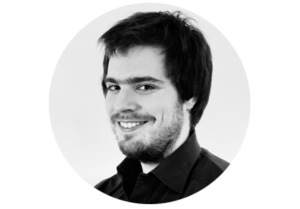
Piotr Pietruczak

Piotr Pietruczak

Founder, Creative Director

Architect and 3D/VFX artist. Graduated from the Faculty of Architecture, Warsaw University of Technology (Eng, MoA). Gained design experience at one of Warsaw’s top architecture studios before fully shifting focus to archviz. Active in the field since 2007; founder of PEAK Studio in 2014.

Combines architectural background with passion for visual storytelling. Has also shared his experience in visual communication as a university guest lecturer and as a speaker and/or panelist at selected industry events. A lifelong fan of hand-drawing techniques and a certified Star Wars obsessive.

Małgorzata Madej

3D Artist, Architect

In 2021 she graduated with distinction from the Faculty of Architecture at Warsaw University of Technology (Eng, MoA). Since the beginning of her studies, she has focused on architectural graphics and the visual storytelling of buildings. Years of professional experience and additional training have shaped her individual approach to each project. She is constantly refining her visualizations along the way. In PEAK since 2020.

Outside of work, she’s passionate about mountain hiking and a devoted horse lover.

Krzysztof Rupiński

Krzysztof Rupiński

IT Specialist

Alongside with Piotr makes sure everything runs smoothly tech-wise. Had previous experience with 3d rendering before on his own, so understands technological challenges we face perfectly.

During his studies at Polish-Japanese Academy of Information Technology he learned a lot about programming as well as creative approach to problem solving. Sportsman, mountain runner and biker.

Clients logos
Clients logos
Clients logos
Clients logos
Clients logos
Clients logos
Clients logos
Clients logos
Clients logos
Clients logos

Our workflow for still images

We use Autodesk 3ds Max with V-Ray 7 (CPU and GPU) and Corona Renderer for most of our still image work. Modeling is supported by tools such as Rhinoceros, SketchUp, and occasionally Revit. For post-production and compositing, we rely mainly on Adobe Photoshop.

Our scenes are always built fully in 3D — not just the architecture, but also the terrain, vegetation, surroundings, and context. We like having full control over the space, the lighting, and the atmosphere — which means we rarely rely on 2D tricks or background plates. It takes more effort upfront, but it pays off in flexibility and consistency later on — especially if the project evolves or transitions into animation.

Here’s how the standard process usually unfolds:

  • Input analysis

    We begin by reviewing all the files provided — technical documentation, 3D models, reference materials, sketches, etc. This gives us the context we need to plan the workflow.

  • Modeling & scene setup

    Based on the project documentation, we build the 3D model of the architecture. If a model is provided, we adapt it to fit our pipeline. We also prepare a basic surrounding context, keeping it flexible since final camera views haven’t been selected yet.

    1

  • 2

    Camera setup & clay previews

    Once the base model is ready, we explore camera angles and prepare clay renders (or screenshots) to confirm the geometry, composition, and perspective. These are shared for feedback before moving on.

  • Lighting, shading & color previews

    We set up lighting and materials, add detail to the surroundings, and incorporate vegetation. With this in place, we produce low-resolution, full-color previews that approximate the final look. From this point forward, we aim to avoid changes to the geometry. At this stage we introduce 3d people to the scene.

    3

  • 4

    High-resolution rendering

    When everything is approved, we render the final images in high resolution.

  • Post-production

    Color grading, 2D compositing, and population (sometimes adding some extra 2d people, details, effects). Sometimes some AI enhancements. This is where a lot of the atmosphere comes together. Once completed, the image is sent to the client. Any further revisions are ideally limited to post-production.

    5

Our workflow for animation

Our process for animation builds on the same foundations as our still image pipeline — accurate modeling, strong composition, and attention to atmosphere — but it adds new layers of complexity and timing.

One of the advantages of our approach is that our still image scenes are already built with a high level of completeness and spatial consistency. We tend to be meticulous when reconstructing the site, context, greenery, and architecture in full 3D — so when it’s time to add camera movement, much of the groundwork is already done. In many cases, creating an animation becomes a matter of refinement and optimization, rather than starting from scratch.

We primarily use Autodesk 3ds Max with V-Ray 7 (CPU and GPU) or Corona Renderer, sometimes combining them with Chaos Vantage for real-time previews. For more interactive or cinematic workflows, we also work with Unreal Engine 5.5.
Final compositing and editing is done in DaVinci Resolve Studio — to ensure that the finished film delivers both in quality and storytelling.

  • 1

    Script & sequencing

    We start by discussing the scope and purpose of the animation: what needs to be shown, how long the film should be, and whether it will include text, voiceover, or branding. A simple storyboard or sequence draft is often created to guide the pacing and structure.

  • Camera path planning & previs

    We design smooth and coherent camera paths through the 3D environment — using simplified geometry and basic shading for early preview animations (previs). These are shared for approval before proceeding with detailed rendering.

    2

  • 3

    Lighting, materials & environment detailing

    Once the camera movement is approved, we refine the lighting, materials, and scene details — including vegetation animation and atmospheric effects (e.g. fog, dust, light shafts).
    If the animation is part of a broader package that already included still imagery, much of this work may already be in place and only require adjustments or optimization for motion.

  • Rendering

    The animation is rendered as a sequence of high-quality frames using V-Ray, Corona, or Chaos Vantage, depending on project requirements. This is often the most time-consuming part of the process.

    4

  • 5

    Editing & post-production

    We assemble the final cut, add color grading, sound, branding, or narration if needed — using DaVinci Resolve or Adobe After Effects. The end result is a fully polished video tailored to your communication goals.




